
Tackle Football Knowledge Base
Quick Jump
- September 14, 2026 — “Ants, Elephants and Greyhounds”
- September 8, 2026 — Penalty Enforcement
- August 31, 2026 — Officiating Standards & Safety Fouls
- August 24, 2026 — Trends Throughout the State; You Make the Call
- August 17, 2026 – Position Breakdown (On field – no materials available)
- August 10, 2026 — 2026 Rule Changes / Part I Exam Review
Meeting Summary — Monday, September 14, 2026
Click the link to see the content
Information
-
Ants, Elephants and Greyhounds — Dave Butts
“Don’t flag ants, always flag elephants, and never make ants into elephants.” State Final Official and IHSA Clinician Dave Butts shares a very insightful approach to calling the game.
Image Review
Click an image to enlarge.
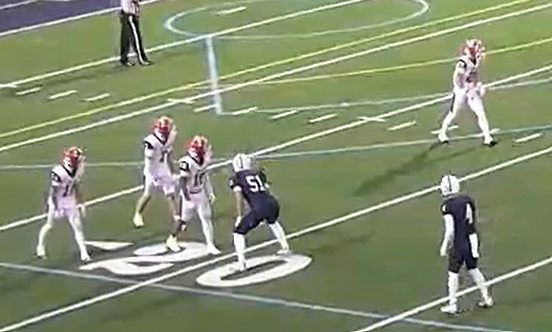
There is a trend in high school football for players to match what they see in college football and the NFL, rolling up their pants and leaving the knees completely exposed. This is illegal in high school football. Rule 1-5-d2: knee pads which are unaltered from the manufacturer’s original design/production, worn over the knee and under the pants, shall be at least ½ inch thick, or ⅜ inch thick if made of shock-absorbing material. The IHSA has asked officials to strongly enforce this rule. Players in this game are clearly wearing their pants in a manner where the knees are not covered by a pad.
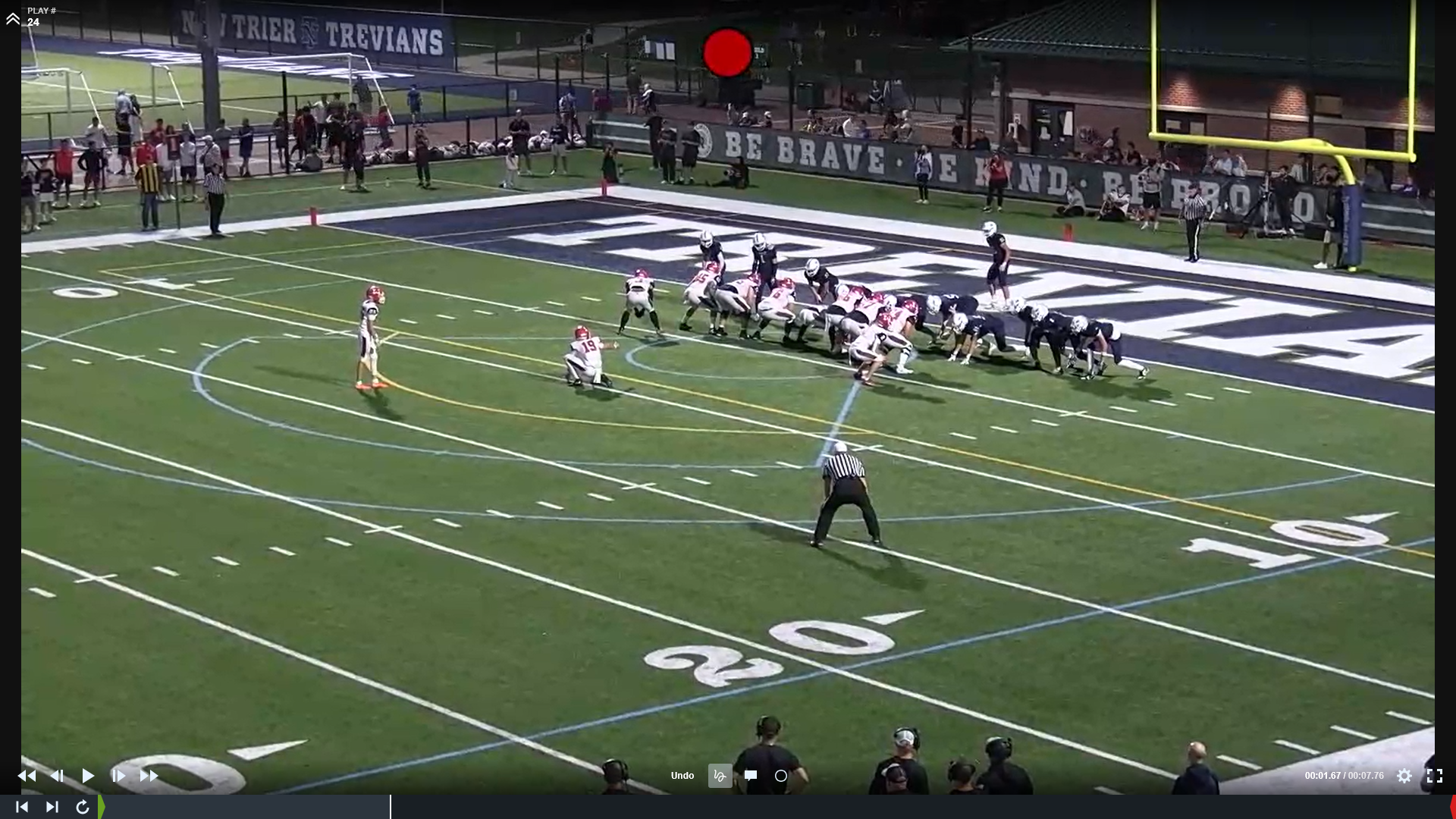
In the IHSA Football Officials Manual under Scrimmage Kick – Field Goal (Try) Mechanics: “The Referee’s initial position should be even with the kicker and at the bottom of the numbers or 9-yard marks.” Most Referees prefer to be looking into the holder on the opposite side of the kicker’s kicking foot. Notice the manual does not specify the side on which the Referee should be positioned. The Referee’s primary responsibility is roughing the kicker or holder on this play. As you gain experience and feel more comfortable, you can work on the back side of the holder, but that should be done only by the most experienced officials. Generally, you should be looking into the holder.
Video Review
-
Youth Football
Two views of a youth football game, video shot by a parent on the sideline. Watch the defensive tackle on the left of the line, #88 in orange. He starts blocking the offensive lineman, and as the play and attention move away, he starts punching his opponent in the stomach. Everyone on the sideline saw the action and there was no call. The player being punched told his parents the kid punched him on several other plays. We have to get this. -
Player Conduct
Watch Player #5 in the black jersey during Team A’s try. Emotions in this game were high for the team in black jerseys since the team in white jerseys had put up a lot of points in a short amount of time. The officiating crew was well aware of these emotions. Player #5 pushes his opponent in the back after the play. The player in white does a pretty good job of walking away, but words are exchanged. Then #5 lifts his helmet and spits on the player in white. Unsportsmanlike fouls are non-contact fouls that violate standards of fair play, respect, and sportsmanship. This was definitely a violation of that standard, and the player was ejected for his actions. -
Late Hit / Targeting?
Multiple views. Watch Team Player #19 (in blue, bottom of the screen). He goes out for a pass but has to come back to the ball, which was thrown short and went to the ground to make the catch. Team B Player #15 (white jersey) contacts the receiver, who is on the ground, and leads with his helmet. Clearly this is at least a personal foul, late hit. But it could be upgraded to illegal helmet contact or targeting. No foul was called on this play. -
Linemen Engaged
Multiple views. Initially, attention is drawn to the double team by the Team A left guard and tackle. They are engaged, and there’s no holding as part of the double team. But watch the middle of the field at the 45-yard line. Clearly the Team A offensive lineman has his arms wrapped around Team B lineman (blue #41) and is holding at the point of attack while the ball carrier runs right by the lineman being held. Reminder for all officials, especially the Umpire and Referee, to widen your view so you can see all engagements — it’s easy to focus narrowly when players are engaged. The Head Line Judge looks downfield because it starts as a pass play, but he clearly looks back into the play and also could have picked up this foul. -
Free Kick Blocking
Multiple views. Team R (in white) is going to return this free kick for a touchdown (nice job by the Back Judge getting back to the goal line!). Watch the first view at normal speed — focus on the blocks by R between the 15-20-yard lines. Do you see anything? Watch the end zone view in the same area. In the third view, watch Team K player #27 (in blue), circled to follow his movement. Team K Player #88 (in white) makes contact with him from behind. Was the runner past the engagement? Should this have been a foul? Easy to see running back the video, but hard to see at full speed — the wings can rule on forward progress, but the Referee has to move focus to the blocking and engagements. All officials have to be looking for this type of play. -
Receiver Contact 1
Multiple views, including one posted on social media. Long pass attempt down the far sideline by Team A (in white). A flag was thrown for defensive pass interference. Hard to see in the first view — watch the view from the end zone camera. There is some limited contact by both players; this is not pass interference. Also watch the defender’s head jerk at the end — the Team A player grabbed the face mask of the Team B player after the ball went by. The final view was posted on social media. Do you see DPI? The social media post is a reminder that everything we do is out there. -
Receiver Contact 2
Multiple views. Watch Team A Player #2, wing back (at the 50-yard line, lower part of the screen). Team B #5 defender (in white) momentarily grabs him as he’s running by. This is pass interference. Good call by the wing official to get this — it was a very short grab, but enough to keep the receiver from getting to the ball. Reminder for wings: even though we don’t move as quickly downfield on pass plays, we still have to turn our eyes toward the receivers and their routes downfield. -
Illegal Participation
Multiple views. You make the call. The Team A receiver (in white) is running a route down the far sideline. From the first side view, he’s very close to the boundary line. In the end zone view at normal speed, he appears to step out of bounds — zoomed in, it’s very close. Rule 9-6-1: no player of A or K shall go out of bounds and return to the field during the down unless blocked out of bounds by an opponent. The receiver was not blocked by an opponent. Do you have illegal participation here? -
Referee Collision
Referee moves in to talk to players who are engaged. Doesn’t see the fall-out from the opposite side, and the pile of players runs into him. Be careful and stay healthy! -
Back Judge Spin
Multiple receivers and defenders converge into the area being covered by the Back Judge. One of the players collides with the BJ and spins him around. Good job by the BJ getting up quickly and making the touchdown call and signal. Be careful and stay healthy!
Meeting Summary — Tuesday, September 8, 2026
Click the link to see the content
Information
-
Penalty Enforcement
Dave Magee takes us through penalty enforcements in Rule 10. - Tackle Football Penalty Enforcement Guide
Video Review
-
Free Kick Foul
During a free kick, the R receiver catches the ball with one foot out of bounds. The covering official throws a flag for the kick going out of bounds. This should have been a valid catch, with the ball dead at the spot. -
Free Kick Entanglement
Watch the initial block by an R (blue jersey) player at about the 40-yard line, middle of the field. This block escalates with two R players engaged with one K player (white jersey). Even though this doesn’t really affect the return, it’s in the middle of the field and in clear view of everyone. Officials should be coming in to cover this engagement and, at the least, have a “talk to.” This probably should have been flagged — holding could be called on both sides, with the penalties offsetting. This sets a tone that this kind of action will result in a foul. -
Scrimmage Kick Rush
Three separate plays from the same game where the team in blue is attempting an extra point. During a try, the snapper is protected. The coach is complaining that his snapper is being hurdled; however, it appears the rushing defender is simply stepping through a gap to rush the try. By the third play, the guard is trying to fill that gap, but the rusher gets through. In our opinion, there is no hurdling or evidence of any fouls on these plays. -
Simultaneous Catch
Multiple views. Watch the corner of the end zone (right side of your screen). The pass to the A receiver was caught at the B 4-yard line. It appears he has control for a very short time before the defender grabs the ball in the end zone, takes it away, and then returns it down the field of play. In the zoomed-in, slow-motion view, the receiver is clearly in control of the ball, and he clearly breaks the plane of the goal line. Rule 7-5-4 states that if a forward pass is caught simultaneously by two opponents, the ball becomes dead and belongs to the passing team. By rule, this should have been ruled dead at the 2-yard line and the ball given to A. There is also a view of this play posted on social media. -
Legal Snap
Side and end zone views. Even though the QB is lined up directly behind the snapper, the ball is actually snapped to a back just to the right of the QB. Is this legal? Yes! Rule 7-2-4 states a snap shall be such that the ball immediately leaves the hand or hands of the snapper and touches a back or the ground before it touches an A lineman. Good play. -
Fumble
Side and end zone views. The A ball carrier loses control of the ball during this running play, and the defense recovers it. You make the call — was his forward progress stopped, or was he down before the ball came loose? Or is this a fumble recovered by B? -
Downfield Block
Watch A2 (black jersey) at about the 30-yard line — he blocks B80 (white jersey), who is clearly looking at the play and not at the blocker. Is all the criteria met for a blindside block? Rule 2-2-10 defines a blindside block as a block against an opponent other than the runner who does not see the blocker approaching — yes. Rule 9-4-3k prohibits executing a blindside block outside of the free-blocking zone with forceful contact unless initiated with open hands; it appears the blocker used his arms and not open hands to initiate contact — yes. There is a good case for an illegal blindside block foul on this play.
Meeting Summary — Monday, August 31, 2026
Click the link to see the content
Information
-
Officiating Standards & Safety Fouls — Paul Black
Paul walks us through rules, guidelines, and video plays of fouls including targeting, defenseless receivers, QB slides, and ball punch clarification.
Video Review
-
Defenseless Receiver
Multiple views of this play. Watch B4, DB lower middle of the screen — he releases from an initial block, goes after the receiver, and makes contact. Does this play meet the criteria for a defenseless receiver call? The defender makes contact with open hands but is not making a play on the ball, since it was thrown well past the contact and the defender isn’t attempting to tackle. Since any other contact before the receiver completes a catch is a foul, this meets the criteria for defenseless receiver. -
Illegal Helmet Contact
Multiple views of this play. Watch A22 (black jersey, bottom of the screen) — at the snap, he goes downfield a few steps, then curls back and gets the linebacker in his view, taking out that defender by lowering his shoulder into the player’s head. The crew called the defenseless receiver foul, but did this meet the NFHS criteria for a flagrant foul — “intentional, reckless, or excessively violent behavior that shows a clear disregard for player safety”? Should A22 have been ejected? In our view, yes. -
QB Punch
Multiple views of this play. Three defenders are pursuing the QB — one rips off the QB’s helmet, and as the QB is on the ground, another defender punches him in the chest. We should have two fouls here: one for the helmet, which should at least be a personal foul face mask (but could have been escalated), and unsportsmanlike conduct with ejection for the player throwing the punch. -
Forward Progress / Fumble
Watch the play at the top of the screen. Even with multiple views, it’s hard to see, but the ball carrier fumbles the ball at the point of contact. The wing official ruled that forward progress was stopped before the fumble — it probably should have been ruled a fumble. -
Missed Try
Even though the kick follows a low line-drive trajectory, the ball clearly clears above the crossbar and should have been an awarded try. The crew called it no good. If there was doubt, the non-calling official should have consulted with the calling official to determine if the try was actually good. -
Running Into
Clear evidence of defense running into the punter during a scrimmage kick. Should have been called — 5 yards from the previous spot, which would have given the kicking team a first down. -
Free Kick Fouls
Multiple views of two fouls on this play. The first is a hold by an R player at about the 21-yard line. The second occurs after the returner was already out of bounds and the play was dead — R99 (white jersey at about the 27-yard line) throws a block on a player who wasn’t looking and was nowhere near the play. We should have two fouls: one for holding, and one for an illegal blindside block, which could have also been escalated since the offended player was clearly well away from the play. -
Illegal Numbering
The white team is in an offensive formation with the deepest player only 9 yards deep. Rule 2-14-2b states a legal scrimmage kick formation is when a player is 10 yards or more behind the line of scrimmage and in position to receive the long snap. The offensive team has two players on the line who are not numbered 50-79 — since they are not in a legal scrimmage kick formation, a numbering exception does not apply.
Meeting Summary — Monday, August 24, 2026
Click the link to see the content
Information
-
Trends Throughout the State — IHSA Head Clinician Rick Karhlicker
No presentation deck, but Rick encouraged all officials to download and print the IHSA Football Officials Manual. -
You Make the Call — Jeff Solomon
Florida State final official and rule interpreter (now living in Illinois) takes us through a series of plays with what to look for and how to adjudicate the play.
Video Review
-
First Touching Onside Kick Attempt
Crew did a good job of “boxing” the kickoff in an onside kick situation. The kick does not go 10 yards — it’s actually touched by a Team K player 8 yards from the kick line. One of the officials mistakenly throws a flag instead of his bean bag to mark the spot. The waving off of the flag caused some confusion, but the play was administered correctly: the receiving team was given the ball for a new series at the spot of first touching. -
Holding Call on Big Play
Multiple views of this play. Watch the top of your screen — Team A #54 is flagged for offensive holding behind the line of scrimmage on a play that results in a big offensive gain being called back. It does not appear there was much engagement by the offensive player, and it doesn’t appear to have had an impact on the play. You make the call — holding, or not? -
Helmet Contact
This is a play that must be called. Watch Team A Player #10 (in white) — he clearly lowers his head and uses his helmet to block a defender in the head and neck area. The defender immediately shows signs of a head injury. This is flagrant enough to possibly warrant an ejection. -
Defensive Pass Interference Called
You make the call. Receiver is going downfield on a long pass play; the defender stays with him. The pass is thrown in the area but not near the receiver. Both players have a right to catch the ball. The defender is holding his ground and denying the receiver a path to the ball, which is good defense — but there is contact. DPI, or nothing?
Meeting Summary — Monday, August 10, 2026
Information
-
AOS 2026-27 Tackle Football Rule Changes and POE
Jim Glueckert, IHSA Clinician and Rules Interpreter, discussed the rule changes and points of emphasis for the upcoming season.